
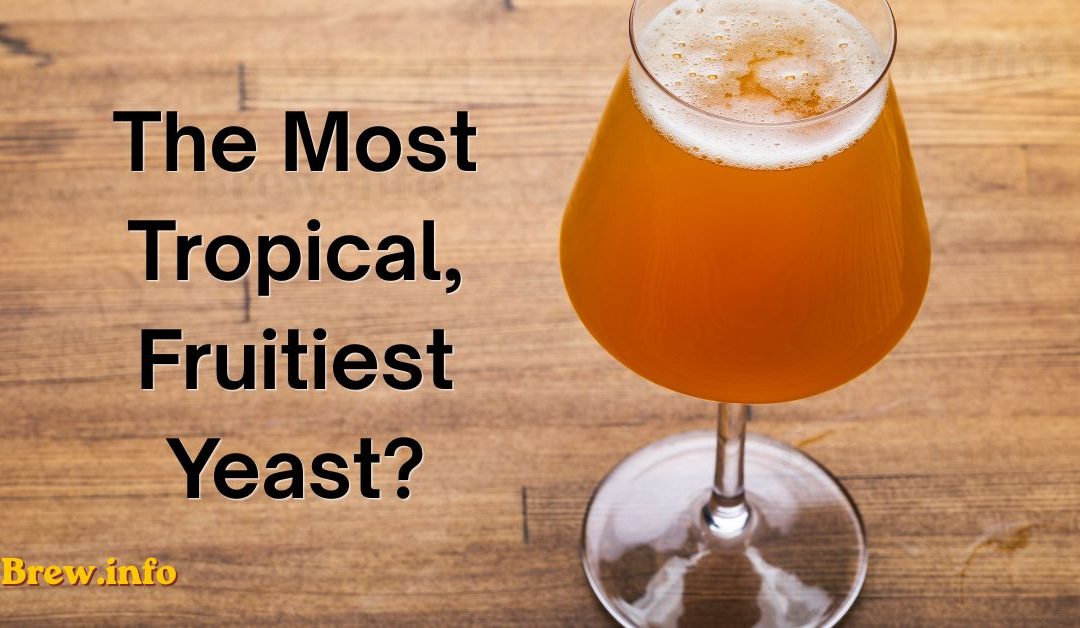
Picking a yeast for your next hazy IPA sounds simple until you start reading forums, watching YouTube reviews, and scrolling through retailer comments at 1 a.m. Everyone has an opinion, and they’re not all saying the same thing.
So we dug into what homebrewers and pro brewers actually think about three of the most popular tropical-forward yeast strains on the market: OYL-200 Tropical IPA, WLP067 Coastal Haze, and OYL-402 Cosmic Punch. We read through forum threads, retailer reviews, side-by-side experiments, and pro brewer interviews to figure out which one earns the title of “most tropical.”
Here’s what we found.
OYL-200 Tropical IPA: The Dependable Fruit Bomb
This is my personal favorite, and if you hang around homebrewing forums long enough, you’ll notice OYL-200 keeps showing up in recommendation threads for tropical IPAs. Brewers on retailer sites like Northern Brewer also call it their “favorite yeast” and some go as far as saying it’s the best IPA yeast they’ve ever used, specifically for hazy and rye IPAs.
The key to getting the most out of OYL-200? Run it warm. Brewers who ferment in the mid-70s up to around 80°F report pronounced pineapple and mango character. At those temps, the yeast really leans into its tropical side and delivers the kind of fruit-forward flavor that makes a hazy IPA stand out. You can see some good discussion about fermentation temps and results in this Reddit thread.
That said, there are some things to know. A few brewers who fermented it on the cooler side, or co-pitched it with other strains, found it surprisingly clean and lacking in tropical punch. Others point out that OYL-200 has low flocculation, meaning you’ll want to cold-crash aggressively and maybe do a couple of transfers if you want the beer to clear up. But once you deal with the haze (or just embrace it, since you’re probably brewing a hazy anyway), the flavor gets high marks across the board.
Best for: Homebrewers who want a strong tropical character without getting into thiolized yeast territory. Simple to use, reliable, and tons of repeat buyers.

WLP067 Coastal Haze: The Quiet Overachiever
WLP067 doesn’t generate the same buzz as some of the trendier strains, but the brewers who use it tend to be very loyal. White Labs designed it as a blend of their favorite New England-style strains, and it shows. Reviews consistently point to tropical, fruit-forward esters with mango and pineapple, plus a dry but juicy finish that works perfectly in a NEIPA.
Homebrewer reviews on Northern Brewer’s WLP067 page are particularly enthusiastic. One reviewer described it as the best hazy yeast they’d tried after working through a bunch of different strains. Others highlight fast, vigorous fermentations, solid haze retention, and clean flavors that let the hops do their thing.
On the pro side, KegLand staff have flagged WLP067 as a favorite for NEIPAs, noting the same hazy appearance and mango/pineapple character that homebrewers love. It’s worth mentioning that a few drinkers on Untappd have noted some strong yeast-driven character in beers brewed with WLP067, with one memorable review calling a sample less than flattering. That’s a reminder that recipe design and fermentation management still matter, even with a great yeast.
But overall? WLP067 doesn’t attract the kind of polarizing reactions you’ll see with thiolized yeasts. Among brewers who use it regularly, the sentiment is strongly positive. It’s the “plug-and-play” hazy yeast that just works.
Best for: Brewers who want a reliable, low-drama hazy NEIPA yeast that delivers juicy tropical character without requiring you to redesign your entire recipe.

OYL-402 Cosmic Punch: Maximum Tropical, Maximum Opinions
If you want the absolute biggest tropical fruit impact, Cosmic Punch is the yeast that most brewers point to. It’s a thiolized strain, meaning it can unlock bound thiols from certain hops and malts, turning them into intense passionfruit, guava, and grapefruit aromatics that non-thiolized yeasts simply can’t produce.
Industry coverage calls OYL-402 the most popular thiolized yeast on the market and a “gateway” strain for brewers getting into thiol-driven fermentations. Pro brewers talk about getting hugely flavored beers that pair especially well with Southern Hemisphere hops like Nelson Sauvin and Motueka. Side-by-side experiments comparing Cosmic Punch against non-thiolized controls describe the thiolized version as tasting like a completely different beer, with Sauvignon Blanc-like grape notes and amplified tropical aromatics.
Homebrewers who’ve dialed it in are equally enthusiastic. On the American Homebrewers Association forum, you’ll find brewers saying they use it regularly and that it gives them exactly the flavor profile they’re chasing.
But here’s the thing: Cosmic Punch is also the yeast that draws the strongest negative reactions when pushed too hard. Some brewers report an overripe, peachy quality they find off-putting, and there’s a notable thread on HomeBrewTalk from brewers who’ve sworn off thiolized yeast entirely. Others warn about savory, oniony, or even “armpit-y” notes when you chase maximum thiol release. There’s also a camp of brewers who like thiolized character in moderation but feel it can clash with more traditional citrus and dank hop profiles like Citra and Mosaic, recommending Cosmic Punch more for Nelson/Sauvignon Blanc-style pairings instead.
To get the best out of Cosmic Punch, you really need to build your recipe around it. That means mash-hopping, choosing thiol-precursor-rich hops, and possibly incorporating Phantasm powder. For a solid overview of how thiolized yeasts work and how to get the most from Cosmic Punch, this writeup from Get Ollie is worth a read. It’s not a drop-in replacement for your regular hazy yeast.
Best for: Pro brewers and advanced homebrewers who want the most intense modern tropical punch and are willing to design recipes specifically around thiol production.

The Quick Comparison
| OYL-200 Tropical IPA | WLP067 Coastal Haze | OYL-402 Cosmic Punch | |
|---|---|---|---|
| Tropical intensity | High (warm fermentation) | Medium-high | Very high (thiol-driven) |
| Key flavors | Pineapple, mango | Mango, pineapple, clean finish | Passionfruit, guava, grapefruit |
| Ease of use | Easy, ferment warm | Very easy, plug-and-play | Requires recipe design around thiols |
| Polarizing? | No | No | Yes, love-it-or-hate-it potential |
| Who loves it | Homebrewers wanting simple tropical IPAs | NEIPA brewers wanting reliability | Advanced brewers chasing max fruit |
So Which One Should You Use?
There’s no single right answer, but here’s a practical way to think about it:
If you’re newer to hazy IPAs or just want a dependable tropical yeast without overthinking it, start with OYL-200 Tropical IPA. Ferment it warm, use generous late hops, and you’ll get a beer that tastes like tropical fruit juice with very little fuss.
If you’re brewing NEIPAs regularly and want something that quietly delivers great results every time, WLP067 Coastal Haze is worth trying. It’s not the flashiest option, but the brewers who use it keep coming back to it.
If you’ve brewed a bunch of hazies already and want to push into new territory, OYL-402 Cosmic Punch will give you flavors that no other approach can match. Just go in with your eyes open, build your recipe around thiol production, and don’t expect it to play nice with every hop combination.
The real takeaway from reading hundreds of brewer opinions? Cosmic Punch gets the loudest buzz in cutting-edge hazy circles, but OYL-200 and WLP067 have a higher ratio of quietly satisfied brewers who just keep reordering them batch after batch. Sometimes the best yeast is the one you trust enough to keep using.
© 2026 by Brew.info, All rights reserved. No part of this document may be reproduced or transmitted in any form or by any means, electronic, mechanical, photocopying, recording, or otherwise, without prior written permission.
Author: Stu
Meet Brew.info's founder and head brewer, Stu. He began homebrewing as a hobby 13 years ago and has now made it a full-time career. He gives his advice, recipes, and reviews of equipment on Brew.info in an effort to encourage others to experience the satisfaction of homebrewing beer. You can find him trying out new breweries and beers, or unwinding at home with a pint of his most recent creation, when he isn't busy brewing or writing about beer. Cheers!