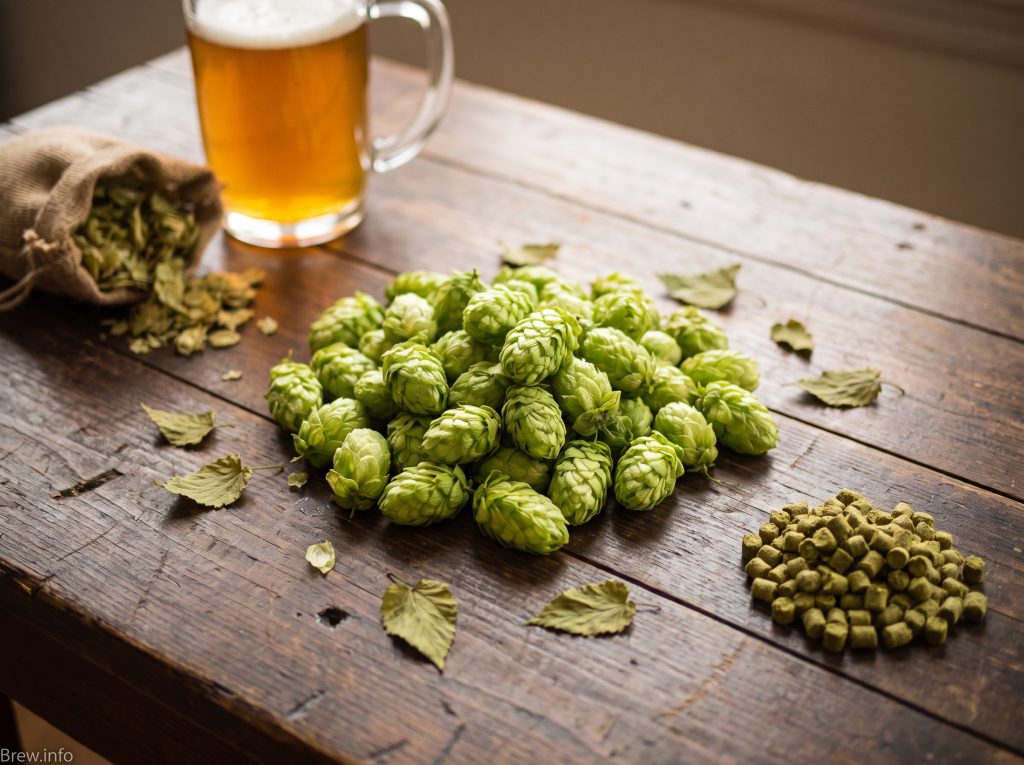
Fuggle is the classic English aroma hop. It brings an earthy, woody, and gently minty character that defines traditional bitters, milds, porters, and English pale ales. If a beer tastes like a proper English pub pint, there’s a good chance Fuggle is in it.
Fuggle at a glance
| Spec | Value |
|---|---|
| Origin | Kent, England |
| Introduced by | Richard Fuggle of Brenchley, Kent |
| Released | 1875 (found as a seedling in 1861) |
| Purpose | Aroma |
| Alpha acids | 3.5 to 6.5% |
| Beta acids | 2 to 4% |
| Cohumulone | 27 to 33% of alpha acids |
| Total oil | 0.7 to 1.2 ml per 100 g |
| Myrcene | 25 to 30% of total oil |
| Humulene | 30 to 38% of total oil |
| Farnesene | 5 to 8% of total oil |
| Aroma | Earthy, woody, grassy, mint, floral, light fruit |
| Substitutes | Willamette, Styrian Golding, East Kent Golding, Tettnang |
Brewing values from Hukins Hops. Values change from crop to crop, so always check the alpha acid on your package.
History and origin
- 1861: A seedling turned up in the hop yard of George Stace at Horsmonden in Kent, according to the USDA hop cultivar collection.
- 1875: Richard Fuggle of Brenchley introduced it commercially under his own name.
- Late 1800s to mid 1900s: Fuggle was the dominant hop in England for around 70 years, until higher alpha varieties made it less economical for bittering.
- Abroad: It spread widely. Styrian Golding in Slovenia is actually a Fuggle clone, and Oregon grew it for decades. It’s also a parent of Cascade and Willamette.
Aroma and flavor
Fuggle smells earthy and woody, with grassy and minty notes and a soft floral edge. Some people describe it as potting soil or forest floor, in a good way. There’s a little fruit in there too, but it’s understated.
It’s a team player. Fuggle rarely jumps out of the glass. It supports the malt and yeast and adds that rustic English character.
How to brew with Fuggle
- Bittering: It can bitter an English ale, but you’ll need a larger charge. Many brewers bitter with a higher alpha English hop like Target or Challenger.
- Late boil: A 15 minute addition and a flameout addition give classic English hop flavor and aroma.
- Dry hop: Fuggle makes a nice dry hop in cask-style bitters. Around 0.5 to 1 oz per 5 gallons is plenty.
- Blending: Fuggle and East Kent Golding is the classic English pairing. Fuggle brings the earth, Golding brings honey and spice.
- Freshness: Its subtle aroma fades fast, so store it cold and sealed.
Tip: Pair Fuggle with an English ale yeast and a little crystal malt. That combination is the heart of a traditional best bitter.
Best beer styles for Fuggle
- Ordinary and Best Bitter
- English Pale Ale and ESB
- English IPA
- Mild and Brown Ale
- Porter and Stout
- Scottish ales
Hops that pair well with Fuggle
| Pairing | What it adds |
|---|---|
| East Kent Golding | Honey, spice, and floral notes. The classic English duo |
| Challenger | Clean bittering with a little spice |
| Target | Higher alpha bittering for bigger English ales |
| Willamette | A softer, fruitier American take on Fuggle |
Fuggle substitutes
- Willamette: A Fuggle descendant with a similar earthy, floral profile.
- Styrian Golding: Genetically a Fuggle, grown in Slovenia, with a slightly spicier edge.
- East Kent Golding: More honey and spice, but right at home in the same styles.
- Tettnang: Works in a pinch for earthy, spicy notes.
Commercial beers that showcase Fuggle
- Timothy Taylor Landlord: A classic Yorkshire pale ale hopped with Fuggle, Golding, and Styrian Golding.
Brew with Fuggle