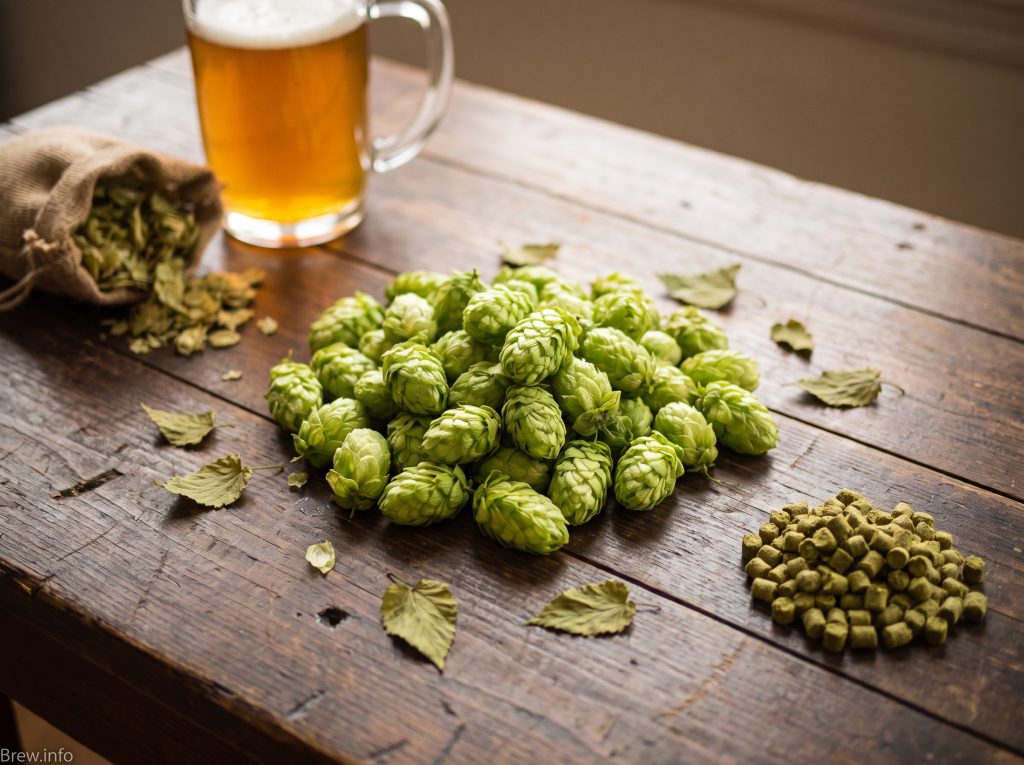
Saaz is the classic Czech noble hop and the signature of the Bohemian pilsner. It’s low in alpha acids but rich in character, with an earthy, spicy, and softly floral aroma that’s hard to mistake for anything else.
Saaz at a glance
| Spec | Value |
|---|---|
| Origin | Žatec (Saaz) region, Czech Republic |
| Type | Landrace (traditional native variety) |
| Purpose | Aroma |
| Alpha acids | 2.5 to 4.5% |
| Beta acids | 4 to 6% |
| Cohumulone | 23 to 26% of alpha acids |
| Total oil | 0.4 to 1 ml per 100 g |
| Myrcene | 25 to 40% of total oil |
| Humulene | 15 to 30% of total oil |
| Caryophyllene | 6 to 9% of total oil |
| Farnesene | 14 to 20% of total oil |
| Aroma | Earthy, spicy, herbal, floral, bergamot, honey |
| Substitutes | US Saaz, Sterling, Lublin, Tettnang, Hallertau Mittelfrüh |
Brewing values from John I. Haas and Yakima Chief Hops. Values change from crop to crop, so always check the alpha acid on your package.
History and origin
- Origins: Saaz has been grown around the town of Žatec, known in German as Saaz, for centuries. Like other noble hops, it’s a landrace that developed naturally in its home region.
- 1842: Brewers in Plzeň created the first golden pilsner with local Saaz hops. That beer became Pilsner Urquell, and Saaz became the defining pilsner hop.
- Today: Czech Saaz is protected by geographic origin, and a US-grown version is also available with slightly higher alpha acids.
Saaz is one of the four traditional noble hops, along with Hallertau Mittelfrüh, Tettnang, and Spalt.
Aroma and flavor
Saaz smells earthy and spicy first, with herbal and floral notes behind it. Brewers also describe hints of bergamot, honey, chamomile, and fresh hay. The overall effect is soft and elegant rather than punchy.
Its high farnesene is unusual and part of what gives Saaz its distinct woody, herbal character. It also has a lot of polyphenols, which contribute to a rounded mouthfeel.
How to brew with Saaz
- Bittering: With alpha acids this low, you’ll need a big charge to bitter with Saaz. The result is soft and pleasant, and many traditional Czech recipes do exactly that.
- Late boil: A 15 to 20 minute addition and a flameout addition give classic Czech pilsner character.
- Dry hop: A light dry hop of 0.5 to 1 oz per 5 gallons works in hoppy pilsners and Czech-style pale lagers.
- Grassy notes: Because you’re using a lot of plant material, keep an eye on vegetal flavors. Whirlpool rather than long boil additions helps.
- Freshness: Saaz stores poorly. Buy fresh, keep it frozen, and use opened packs quickly.
Tip: Saaz pairs beautifully with soft water and a pilsner malt base. If your Bohemian pilsner tastes harsh, check your water before blaming the hops.
Best beer styles for Saaz
- Czech Pilsner (Bohemian Pilsner)
- Czech Pale and Amber Lager
- German Pilsner
- Belgian Blonde and Tripel
- Belgian Witbier
- Saison
Hops that pair well with Saaz
| Pairing | What it adds |
|---|---|
| Hallertau Mittelfrüh | Floral, herbal noble character |
| Tettnang | Delicate spice and floral notes |
| Magnum | Clean bittering so Saaz can focus on aroma |
| Styrian Golding | Earthy, slightly fruity notes for Belgian styles |
Saaz substitutes
- US Saaz: The same variety grown in the US, with a bit more alpha and slightly less complexity.
- Sterling: An American hop with Saaz in its family tree and a similar spicy, herbal profile.
- Lublin: A Polish noble-type hop that’s very close to Saaz.
- Tettnang: A fellow noble hop with soft spice.
Commercial beers that showcase Saaz
- Pilsner Urquell: The original golden pilsner and the definitive Saaz beer.
Brew with Saaz