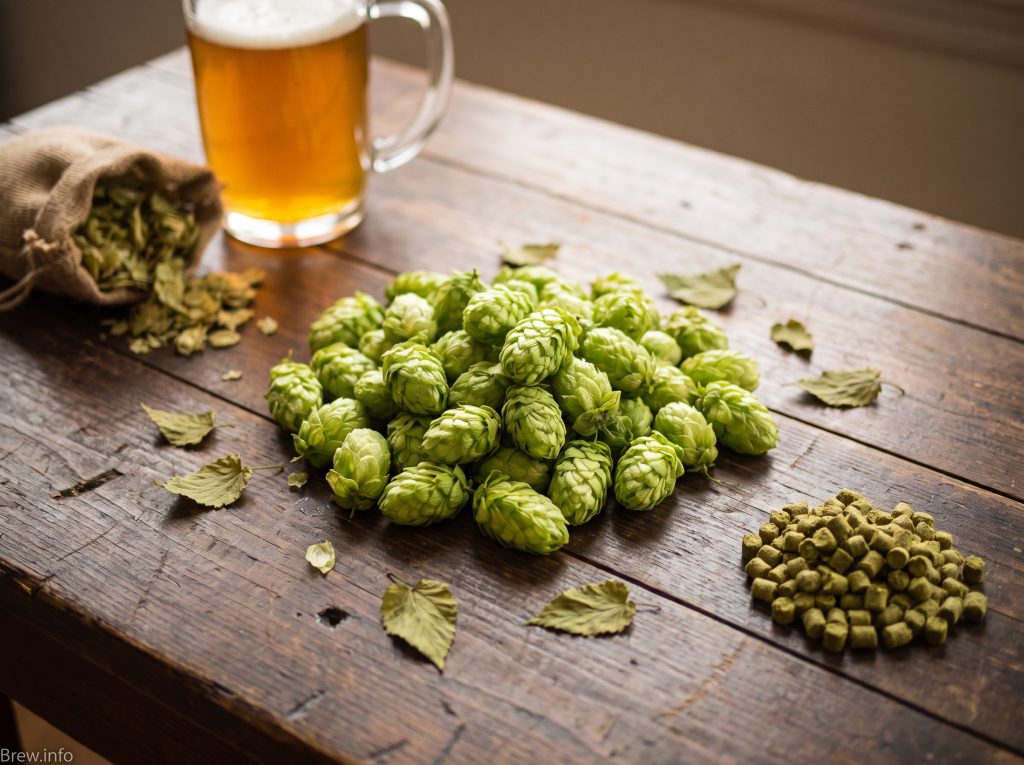
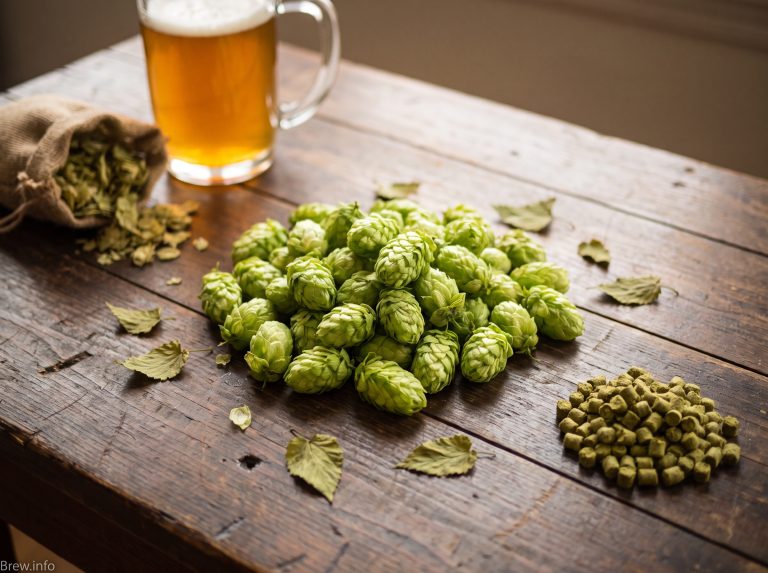
Hallertau Mittelfrüh is the classic German noble hop. It has a delicate floral, herbal, and gently spicy aroma, and it’s the traditional choice for German lagers, pilsners, and wheat beers.
Hallertau Mittelfrüh at a glance
| Spec | Value |
|---|---|
| Variety code | HAL |
| Origin | Hallertau region, Bavaria, Germany |
| Type | Landrace (traditional native variety) |
| Purpose | Aroma |
| Alpha acids | 3 to 5.5% |
| Beta acids | 3 to 5% |
| Cohumulone | 18 to 28% of alpha acids |
| Total oil | 0.7 to 1.3 ml per 100 g |
| Myrcene | 20 to 28% of total oil |
| Humulene | 33 to 55% of total oil |
| Farnesene | Under 1% of total oil |
| Linalool | 0.7 to 1.1% of total oil |
| Aroma | Floral, herbal, mild spice, lilac, carnation, light citrus |
| Substitutes | Hallertau Tradition, Liberty, Mount Hood, Tettnang |
Brewing values from BarthHaas. Values change from crop to crop, so always check the alpha acid on your package.
History and origin
- Origins: Mittelfrüh is the native landrace of the Hallertau, the largest hop growing region in the world. It wasn’t bred so much as it adapted to the region over centuries.
- The name: Mittelfrüh means middle-early in German, which refers to its harvest timing.
- Decline: The variety is very susceptible to Verticillium wilt, and plantings dropped sharply through the 20th century as growers moved to hardier hops.
- Comeback: Strong demand and virus-free plant material in the early 2000s helped revive it, according to BarthHaas.
It’s one of the four traditional noble hops, alongside Saaz, Tettnang, and Spalt.
Aroma and flavor
Hallertau Mittelfrüh is subtle and refined. Expect floral and herbal notes first, with mild spice, a touch of wood, and a hint of citrus or red currant. It never shouts. It just makes a clean lager taste more complete.
Unlike most American hops, its oil is dominated by humulene rather than myrcene. That’s where the gentle herbal and spicy character comes from.
How to brew with Hallertau Mittelfrüh
- Bittering: Low alpha acids mean you need a large charge, but the bitterness is famously soft and smooth. Traditional German brewers often bitter with it anyway.
- Late boil: This is where it belongs. A 10 to 20 minute addition and a flameout addition give classic noble hop flavor.
- Dry hop: Less common, but a light dry hop of 0.5 to 1 oz per 5 gallons works well in a hoppy pilsner or Kellerbier.
- Freshness: Its delicate aroma fades quickly. Buy fresh and store cold.
Tip: Because the alpha acids are low, plug your actual package numbers into your brewing software. A small change in alpha can shift IBUs a lot with this much hop in the kettle.
Best beer styles for Hallertau Mittelfrüh
- German Pilsner
- Munich Helles
- Märzen and Oktoberfest
- Hefeweizen
- Kölsch
- Bock and Maibock
Hops that pair well with Hallertau Mittelfrüh
| Pairing | What it adds |
|---|---|
| Saaz | Earthy, spicy depth for a pilsner |
| Tettnang | Delicate floral and spice |
| Hallertau Magnum | A clean, efficient bittering charge |
| Hersbrucker | Extra floral and fruity notes |
Hallertau Mittelfrüh substitutes
- Hallertau Tradition: Bred to replace Mittelfrüh, with very similar character and better disease resistance.
- Liberty: An American daughter of Mittelfrüh with a close aroma.
- Mount Hood: Another American hop with a mild, clean noble profile.
- Tettnang: A fellow noble hop that works in most German styles.
Commercial beers that showcase Hallertau Mittelfrüh
- Samuel Adams Boston Lager: A Vienna-style lager hopped and dry hopped with Hallertau Mittelfrüh.
Brew with Hallertau Mittelfrüh