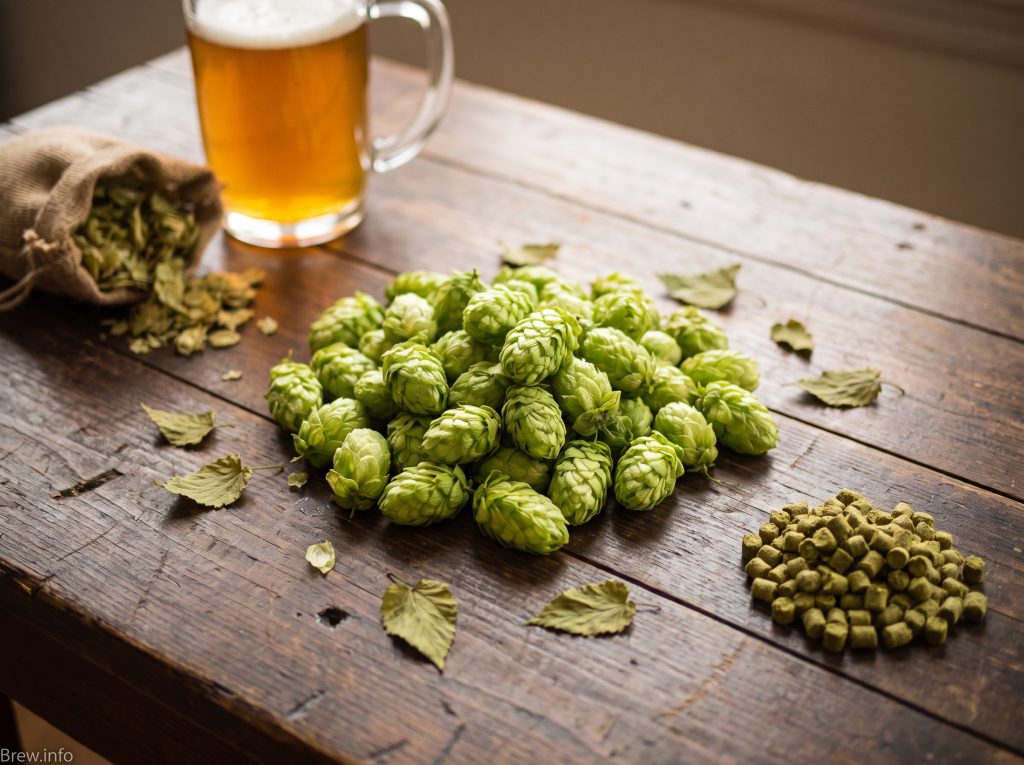
Mosaic is an American dual purpose hop with an unusually complex aroma: blueberry, mango, tangerine, and pine, all at once. It’s one of the most popular hops of the last decade and a go-to for hazy and West Coast IPAs alike.
Mosaic at a glance
| Spec | Value |
|---|---|
| Variety code | HBC 369 |
| Origin | Yakima, Washington, USA |
| Bred by | Hop Breeding Company (Yakima Chief Ranches and John I. Haas) |
| Released | 2012 |
| Purpose | Dual purpose, aroma and bittering |
| Alpha acids | 11.5 to 13.5% |
| Beta acids | 3.2 to 3.9% |
| Cohumulone | 24 to 26% of alpha acids |
| Total oil | 1 to 1.5 ml per 100 g |
| Myrcene | 47 to 53% of total oil |
| Humulene | 13 to 16% of total oil |
| Caryophyllene | 5 to 8% of total oil |
| Farnesene | Under 1% of total oil |
| Aroma | Blueberry, mango, tangerine, lime, passion fruit, pine |
| Substitutes | Citra, Simcoe, Galaxy, El Dorado |
Brewing values from John I. Haas. Values change from crop to crop, so always check the alpha acid on your package.
History and origin
- Breeding: Mosaic is the daughter of Simcoe and a male derived from Nugget. It was developed by the Hop Breeding Company as HBC 369.
- 2012: It was released to brewers and caught on almost immediately.
- 2022: According to Get Ollie, citing Hop Growers of America data, Mosaic was the second most harvested hop in the Pacific Northwest, behind only Citra.
The name fits. Mosaic’s aroma is a patchwork of fruit, pine, and earth that shifts depending on the crop and how you use it.
Aroma and flavor
Blueberry is Mosaic’s calling card, and it’s rare among hops. Around it you’ll find mango, tangerine, lime, peach, and passion fruit, plus a piney, earthy backbone inherited from Simcoe. Some batches lean more tropical, others more dank and resinous.
In heavy doses, some people pick up an onion or garlic note. That usually points to too much hop, too long a contact time, or a particular crop lot.
How to brew with Mosaic
- Bittering: Mosaic has high alpha acids and moderate cohumulone, so it bitters cleanly. Many brewers still use a cheaper hop for bittering and save Mosaic for aroma.
- Late boil and whirlpool: A whirlpool addition at about 170°F for 15 to 30 minutes brings out the fruit.
- Dry hop: Its best use. Try 1 to 2 oz per 5 gallons for a pale ale and 3 to 4 oz for an IPA.
- Contact time: Keep dry hop contact to about 3 to 5 days to avoid vegetal or savory notes.
- Freshness: Buy vacuum-sealed pellets from a recent harvest and keep them frozen.
Tip: Mosaic works great as a single hop, but blending it with Citra is the most popular move in modern IPA brewing for good reason.
Best beer styles for Mosaic
- Hazy or New England IPA
- West Coast IPA
- Double IPA
- American Pale Ale
- Session IPA
- Fruited sours and hoppy wheat beers
Hops that pair well with Mosaic
| Pairing | What it adds |
|---|---|
| Citra | Bright tropical citrus. Probably the most popular Mosaic partner |
| Simcoe | Pine and passion fruit from Mosaic’s parent |
| Galaxy | Intense passion fruit and peach |
| Amarillo | Orange and apricot for a softer citrus |
| Nelson Sauvin | White wine and gooseberry for something different |
Mosaic substitutes
- Citra: More citrus and less berry, but the closest swap for most recipes.
- Simcoe: Its parent, with more pine.
- Galaxy: More intense tropical fruit. Use a little less.
- El Dorado: Candy-like stone fruit and tropical notes.
Commercial beers that showcase Mosaic
- Founders Mosaic Promise: A single hop ale that pairs Mosaic with Golden Promise malt.
Brew with Mosaic