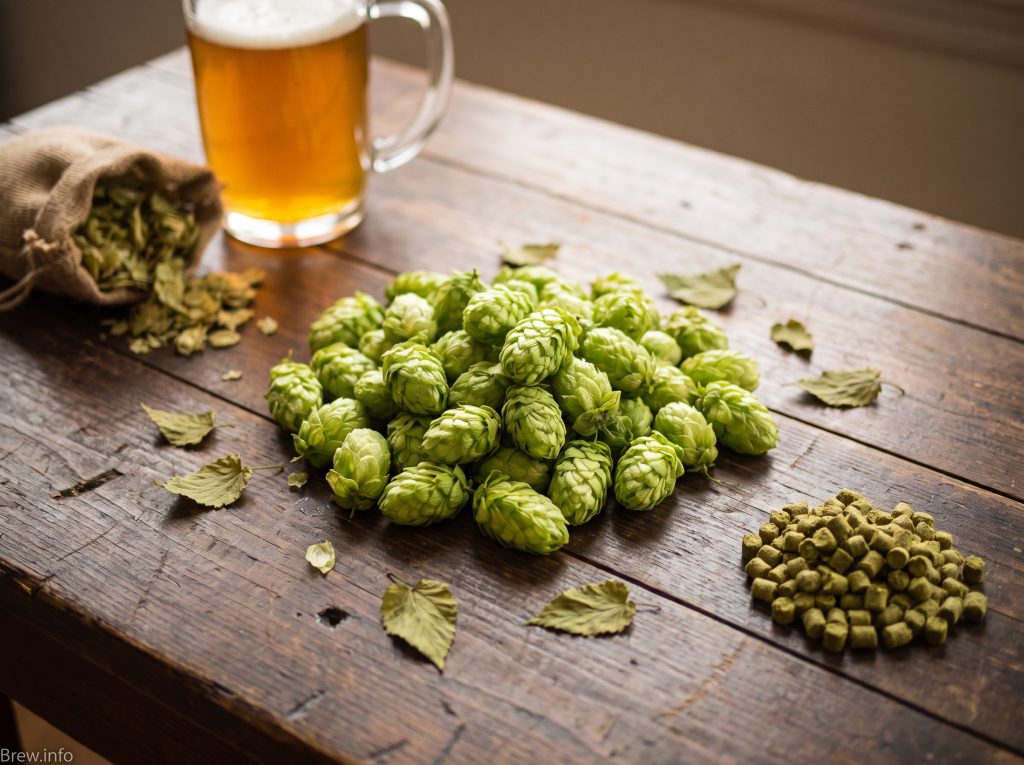
Amarillo is an American aroma hop with soft, sweet citrus. Think orange, tangerine, and apricot more than the sharp grapefruit of Cascade. It’s a favorite for pale ales and IPAs that want a juicy, sunny profile.
Amarillo at a glance
| Spec | Value |
|---|---|
| Variety code | VGXP01 |
| Origin | Washington, USA |
| Discovered by | Virgil Gamache Farms |
| Released | Late 1990s to 2000 (sources vary) |
| Purpose | Aroma, also usable for bittering |
| Alpha acids | 6.5 to 11% |
| Beta acids | 5.5 to 8% |
| Cohumulone | 20 to 24% of alpha acids |
| Total oil | 1 to 2.5 ml per 100 g |
| Myrcene | 68 to 70% of total oil |
| Humulene | 9 to 11% of total oil |
| Caryophyllene | 2 to 4% of total oil |
| Farnesene | 2 to 8% of total oil |
| Aroma | Orange, tangerine, lemon, apricot, melon, floral |
| Substitutes | Cascade, Centennial, Simcoe, Citra |
Brewing values from Yakima Chief Hops and John I. Haas. Values change from crop to crop, so always check the alpha acid on your package.
History and origin
Amarillo wasn’t bred in a lab program. It was found.
- Discovery: The Gamache family spotted an unusual plant growing in one of their hop yards in Washington’s Yakima Valley. It came from open pollination, so its parentage is unknown.
- Introduction: Virgil Gamache Farms propagated the plant and introduced it under the Amarillo brand.
- Today: It’s a proprietary variety and one of the top aroma hops used by American craft brewers.
Aroma and flavor
Amarillo is the friendly citrus hop. It gives orange and tangerine first, then lemon, apricot, peach, and melon, with a soft floral note in the background. It’s sweeter and rounder than Cascade or Centennial.
That high myrcene content is what drives the bright fruit. It also means Amarillo really shines in late additions and dry hopping, where those oils survive.
How to brew with Amarillo
- Bittering: Amarillo’s low cohumulone gives a smooth bitterness, so it can bitter a pale ale. Since it’s usually pricey, most brewers save it for later additions.
- Late boil and whirlpool: A whirlpool addition at about 170°F for 15 to 20 minutes brings out the orange and apricot.
- Dry hop: Use about 1 to 2 oz per 5 gallons for a pale ale and 2 to 3 oz for an IPA.
- Single hop beers: Amarillo makes a lovely single hop pale ale, though some brewers find it a bit soft on its own.
Tip: Amarillo and Simcoe are a classic pair. Simcoe adds the pine and structure that Amarillo lacks.
Best beer styles for Amarillo
- American Pale Ale
- American IPA and Hazy IPA
- Double IPA
- American Amber Ale
- Wheat beer
- Hoppy lagers
Hops that pair well with Amarillo
| Pairing | What it adds |
|---|---|
| Simcoe | Pine and passion fruit. The classic Amarillo partner |
| Citra | Tropical punch for a juicier beer |
| Centennial | Lemon and floral brightness |
| Mosaic | Berry and mango for complexity |
| Chinook | Pine and spice to firm things up |
Amarillo substitutes
- Cascade: More grapefruit and less orange, but close enough in a pale ale.
- Centennial: Brighter lemon citrus with higher alpha acids.
- Simcoe: Adds pine, but shares some of the stone fruit.
- Citra: More tropical, but works in hazy IPAs.
Commercial beers that showcase Amarillo
- Dogfish Head 60 Minute IPA: Continually hopped with a blend that includes Amarillo and Simcoe.
Brew with Amarillo