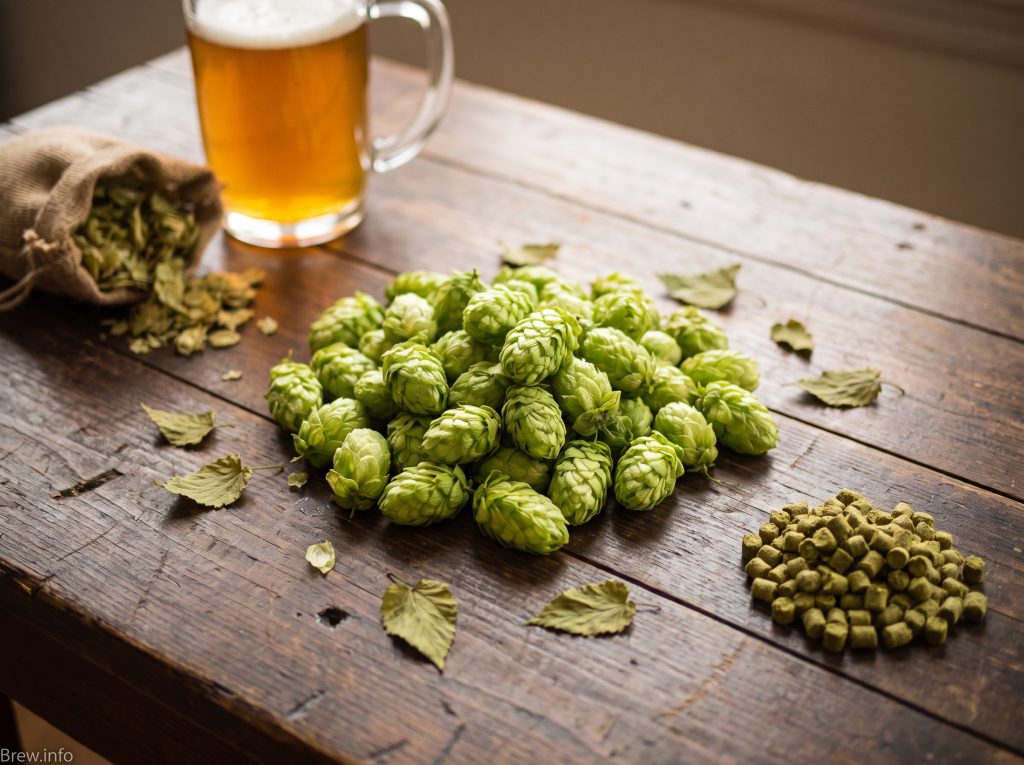
Chinook is an American dual purpose hop known for pine, spice, and grapefruit. It started life as a high alpha bittering hop, but craft brewers fell for its resinous aroma, and it’s now a cornerstone of West Coast IPAs and winter ales.
Chinook at a glance
| Spec | Value |
|---|---|
| Origin | Washington, USA |
| Bred by | USDA breeding program in Washington State |
| Released | 1985 |
| Purpose | Dual purpose, bittering and aroma |
| Alpha acids | 11 to 15% |
| Beta acids | 3 to 4.5% |
| Cohumulone | 26 to 35% of alpha acids |
| Total oil | 1 to 2.7 ml per 100 g |
| Myrcene | 25 to 40% of total oil |
| Humulene | 18 to 25% of total oil |
| Caryophyllene | 6.5 to 11% of total oil |
| Farnesene | Under 1% of total oil |
| Aroma | Pine, grapefruit, spice, resin, light smoke |
| Substitutes | Columbus, Nugget, Northern Brewer, Centennial |
Brewing values from Yakima Chief Hops. Values change from crop to crop, so always check the alpha acid on your package.
History and origin
- Breeding: Chinook came from a cross between the English Petham Golding and a USDA male selected for high alpha acids and good storage.
- 1985: The USDA released it in Washington State as a high alpha bittering variety.
- 1990s onward: Craft brewers started using it late in the boil and in dry hopping, and it earned a second life as a dual purpose hop.
That Golding parent is a fun bit of trivia. Chinook is about as bold and American as hops get, but it has English roots.
Aroma and flavor
Chinook is all about pine and grapefruit. It has a resinous, almost sappy quality, with spice and a hint of smoke behind it. Some brewers also pick up berry and stone fruit in fresh lots.
It’s assertive. A little goes a long way, and it can easily dominate a recipe if you’re heavy handed.
How to brew with Chinook
- Bittering: This is where Chinook built its reputation. High alpha acids mean you need less of it. Its bitterness is firm and a little sharp, which suits West Coast IPAs.
- Late boil and whirlpool: Small late additions add pine and grapefruit. Go easy at first and adjust next batch.
- Dry hop: Use it as part of a blend. About 0.5 to 1 oz per 5 gallons alongside softer citrus hops adds a resinous edge.
- Dark beers: Chinook’s spice and pine work surprisingly well in hoppy stouts, porters, and winter warmers.
Tip: If a beer feels too sweet or fruity, a touch of Chinook in the whirlpool brings it back into balance.
Best beer styles for Chinook
- West Coast IPA
- Double IPA
- American Pale Ale
- American Strong Ale
- Winter warmers and holiday ales
- Hoppy stouts and porters
Hops that pair well with Chinook
| Pairing | What it adds |
|---|---|
| Cascade | Softer grapefruit and floral notes to round out the pine |
| Centennial | Lemon and floral brightness |
| Simcoe | More pine plus passion fruit |
| Amarillo | Orange and apricot to soften the resin |
| Citra | Tropical fruit for a modern West Coast IPA |
Chinook substitutes
- Columbus: Similar alpha acids with more dank character.
- Nugget: A clean high alpha bittering swap.
- Northern Brewer: Piney and woody, works in darker beers.
- Centennial: Less pine, more citrus, but fine in an IPA.
Commercial beers that showcase Chinook
- Stone Arrogant Bastard Ale: A strong ale with a big, aggressive Chinook bitterness.
- Sierra Nevada Celebration: A fresh hop winter IPA that pairs Chinook with Cascade and Centennial.
Brew with Chinook