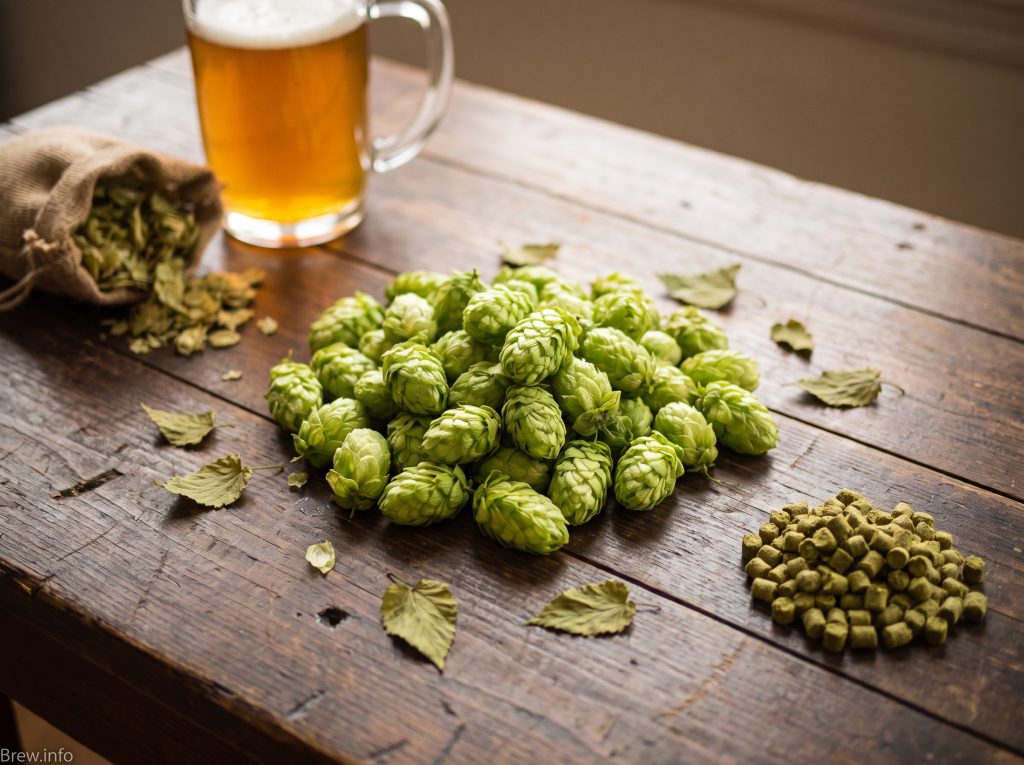
Cascade is the hop that launched American craft beer. It’s an aroma hop with a bright grapefruit and floral character, and it still shows up in pale ales, IPAs, ambers, and wheat beers more than fifty years after its release.
Cascade at a glance
| Spec | Value |
|---|---|
| Variety code | USDA 56013 |
| Origin | Corvallis, Oregon, USA |
| Bred by | USDA breeding program with Oregon State University |
| Released | 1972 |
| Purpose | Aroma, with moderate bittering |
| Alpha acids | 4.5 to 9% |
| Beta acids | 4.8 to 7.5% |
| Cohumulone | 29 to 40% of alpha acids |
| Total oil | 0.7 to 2 ml per 100 g |
| Myrcene | 40 to 60% of total oil |
| Humulene | 10 to 20% of total oil |
| Caryophyllene | 4 to 10% of total oil |
| Farnesene | 4.5 to 8.5% of total oil |
| Aroma | Grapefruit, orange peel, floral, light pine and spice |
| Substitutes | Centennial, Amarillo, Ahtanum, Citra, Columbus |
Brewing values from Yakima Chief Hops and John I. Haas. Values change from crop to crop, so always check the alpha acid on your package.
History and origin
Cascade came out of a USDA effort to give American growers a domestic aroma hop that could stand in for European varieties.
- 1956: The original cross was made in the USDA program in Corvallis, Oregon. Its parents were an English Fuggle and a seedling of the Russian variety Serebrianka.
- 1972: Cascade was released to growers. Coors was one of its first big buyers after a blight hit European hop supplies.
- 1975: Anchor Brewing used it in Liberty Ale, one of the first modern American beers built around hop aroma.
- 1980: Sierra Nevada Pale Ale put Cascade on the map. Its grapefruit nose became the signature of the American pale ale.
- Today: It’s grown across the Pacific Northwest and in New Zealand, Australia, Argentina, and Germany, and it remains one of the most planted aroma hops in the US.
Aroma and flavor
Cascade is the classic American citrus hop. The first thing most people notice is grapefruit, followed by orange peel and a soft floral quality. Behind that you’ll find light pine, a little spice, and sometimes a hint of stone fruit.
Compared with modern hops like Citra or Mosaic, Cascade is gentler and less tropical. That restraint is part of its appeal. It reads as clean and balanced, and it won’t bully the malt in an amber ale or a pale ale.
How to brew with Cascade
- Bittering: With moderate alpha acids, Cascade can bitter a pale ale on its own, but you’ll need a bigger charge than you would with a high alpha hop. Many brewers use a clean bittering hop like Magnum and save Cascade for later additions.
- Late boil and whirlpool: A 10 to 15 minute addition or a whirlpool at about 170°F builds that grapefruit flavor without harsh bitterness.
- Dry hop: Cascade dry hops well. About 1 to 2 oz per 5 gallons is plenty for a pale ale. IPAs can take 2 to 3 oz.
- Single hop beers: Cascade is one of the best hops for a single hop pale ale. It has enough range to carry a beer start to finish.
- Freshness: Cascade stores only moderately well. Buy recent harvest pellets, keep them in the freezer, and use opened packs quickly.
Tip: If you’re learning how hops behave at different points in the boil, Cascade is a great teaching hop. Its character is easy to pick out, so you can taste what each addition is doing.
Best beer styles for Cascade
- American Pale Ale
- American IPA and West Coast IPA
- American Amber Ale
- American Wheat Beer
- Blonde Ale and Cream Ale
- Saison and hoppy farmhouse ales
Hops that pair well with Cascade
| Pairing | What it adds |
|---|---|
| Centennial | More intense citrus and floral notes. The classic pale ale partner |
| Chinook | Pine and spice for a sharper, more resinous beer |
| Citra | Tropical fruit layered over Cascade’s grapefruit |
| Amarillo | Orange and apricot for a softer, sweeter citrus |
| Simcoe | Pine and passion fruit for extra depth |
Cascade substitutes
No hop is an exact match, but these get you close:
- Centennial: Often called a super Cascade. Similar citrus and floral notes with higher alpha acids, so use a little less for bittering.
- Amarillo: More orange than grapefruit, but a solid swap in pale ales.
- Ahtanum: A close relative in character, with grapefruit and floral notes.
- Columbus: Works in a pinch for bittering and late additions, though it’s danker.
Commercial beers that showcase Cascade
- Sierra Nevada Pale Ale: The beer that defined the American pale ale, with Cascade front and center.
- Anchor Liberty Ale: An early dry hopped American ale built on Cascade.
Brew with Cascade