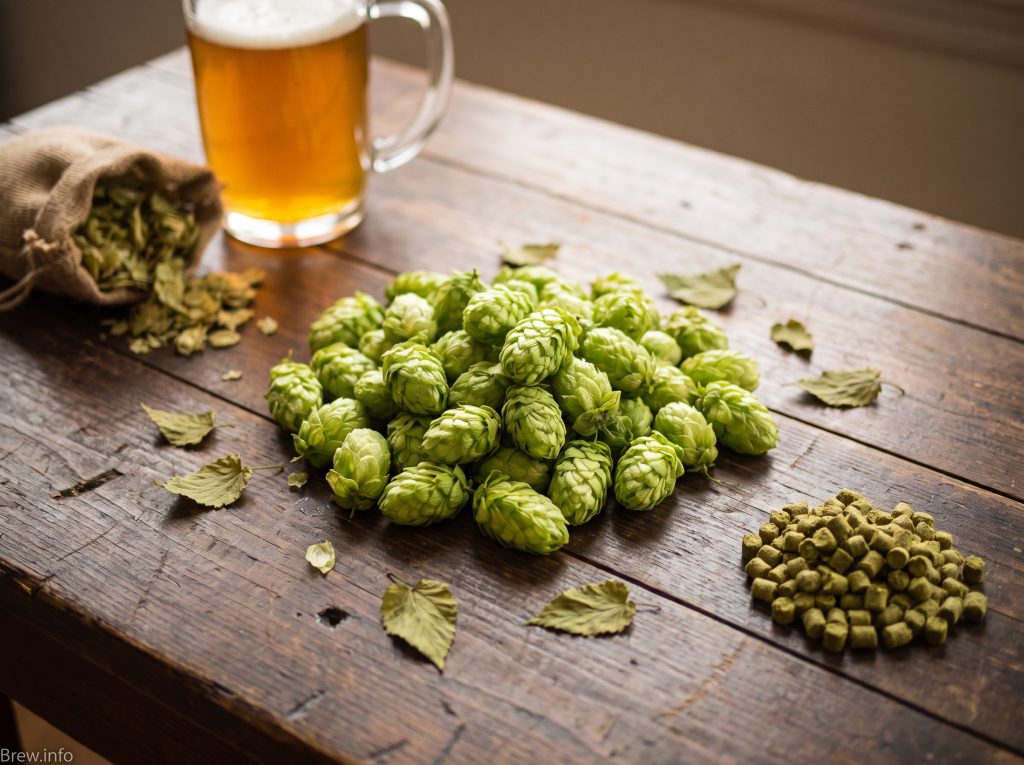
Simcoe is an American dual purpose hop with a mix of pine, passion fruit, and grapefruit. It’s one of the most versatile hops around, at home in West Coast IPAs, hazy IPAs, pale ales, and even hoppy lagers.
Simcoe at a glance
| Spec | Value |
|---|---|
| Variety code | YCR 14 |
| Origin | Yakima, Washington, USA |
| Bred by | Yakima Chief Ranches |
| Released | 2000 |
| Purpose | Dual purpose, aroma and bittering |
| Alpha acids | 10 to 16% |
| Beta acids | 3 to 5% |
| Cohumulone | 15 to 21% of alpha acids |
| Total oil | 0.8 to 3.2 ml per 100 g |
| Myrcene | 40 to 65% of total oil |
| Humulene | 10 to 20% of total oil |
| Farnesene | Under 1% of total oil |
| Aroma | Pine, passion fruit, grapefruit, berry, earthy |
| Substitutes | Mosaic, Citra, Amarillo, Summit, Columbus |
Brewing values from Yakima Chief Hops and Charles Faram. Values change from crop to crop, so always check the alpha acid on your package.
History and origin
- Breeding: Simcoe came from an open pollination in the Yakima Chief Ranches program, so its father is unknown.
- 2000: It was released as YCR 14 through Select Botanicals Group.
- 2000s: Brewers working on big IPAs embraced it for its blend of pine and fruit.
- 2012: Simcoe became the mother of Mosaic, one of the most popular hops of the last decade.
Aroma and flavor
Simcoe walks a line between old school and new school. On one side you get pine and a little earthy dankness. On the other you get passion fruit, grapefruit, apricot, and berry. Depending on the crop and how you use it, it can lean either direction.
Used heavily, some people pick up a catty or onion-like note. That’s usually a sign of too much hop or too long a dry hop contact time.
How to brew with Simcoe
- Bittering: Simcoe’s very low cohumulone gives a smooth, clean bitterness. It’s one of the better high alpha hops for bittering an IPA.
- Late boil and whirlpool: A whirlpool addition at around 170°F brings out passion fruit and pine without harshness.
- Dry hop: Use 1 to 2 oz per 5 gallons for a pale ale or 2 to 4 oz for an IPA. Keep contact to about 3 to 5 days.
- Blending: Simcoe plays well with almost everything, which makes it a great glue hop in multi-hop recipes.
- Freshness: Its fruity aroma fades fast once hops oxidize, so store pellets cold and sealed.
Tip: If your IPA tastes thin or one-dimensional, swapping a third of the dry hop for Simcoe often adds the depth you’re missing.
Best beer styles for Simcoe
- West Coast IPA
- Hazy or New England IPA
- Double IPA
- American Pale Ale
- Hoppy lagers and pilsners
- Saison and wheat beer
Hops that pair well with Simcoe
| Pairing | What it adds |
|---|---|
| Citra | Bright tropical citrus over Simcoe’s pine |
| Mosaic | Blueberry and mango. Its daughter hop, and a natural match |
| Amarillo | Orange and apricot for a sunnier profile |
| Centennial | Lemon and floral notes |
| Chinook | Extra pine and spice for West Coast styles |
Simcoe substitutes
- Mosaic: Its daughter, with more berry and tropical fruit.
- Summit: High alpha with citrus and a little dank.
- Citra: Less pine, more tropical, but works in hazy IPAs.
- Amarillo: Softer and more orange-forward.
Commercial beers that showcase Simcoe
- Weyerbacher Double Simcoe IPA: A double IPA built entirely around Simcoe.
- Russian River Pliny the Elder: A legendary double IPA where Simcoe is part of the hop bill.
Brew with Simcoe